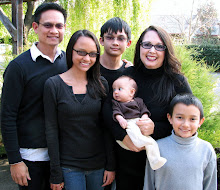
teaching at east bay and davis
Where is Waldorf? Waldorf is where there is a community of people dedicated to the holistic wellness of our children and the world we live in. Two places I know of are East Bay Waldorf School and Davis Waldorf School, where in the former I am currently teaching, and the latter, I will be in the fall 2010 school year.
How I became so amazingly blessed to spend time with the faculty, students, and parents of both places is unfathomable! It seems the angels have been secretly watching over me as I went about my work. I accept their gift with humility, and gratitude.
This is not the kind of gift one receives like a gift certificate to a day spa!
It is more of the kind of gift like I have just been knighted. It is really cool and honorable, but you know you've got some serious work to do thereafter!
At East Bay Waldorf, I have been teaching sciences and math to the upper grades, with an economics block winding down the week after spring break. That same week, I am starting my new assignment at East Bay taking the children of class two through to the end of the school year! (Their wonderful teacher since first grade is blessed with a pregnancy, but is also experiencing some health-related concerns.) With nine weeks left, we will have time for a 4 week math block and a 4 week language arts block, and a week for review of recap of the year. I will reinforce their math skills and their reading and writing skills to prepare them for third grade. Overall, my goal is to maintain the joyfulness in their hearts and the reverence of their classroom, so that at whatever capacity they are at, they will meet their learning with love and enthusiasm.
At Davis Waldorf School, I will enter the fall 2010 school year as the sixth grade teacher. This will be a wonderful journey and hope to graduate the Class of 2013! I have many great ideas for the fall, and am looking forward to connecting with the children and parents in creating a synergistic flow of learning, doing, feeling, and being!
My new post has been recently announced to the parents of the children, and Kelly Brewer, the administrator at DWS, directed parents to visit my blogsite. I have attached links to previous blog posts that DWS parents might be interested in. Of course, you are welcome to read any of my postings and visit other blogsites as well!
Please visit the following links for highlights:
My kids:
http://thewaldorfway.blogspot.com/2009/10/my-children.html
Ricky
http://thewaldorfway.blogspot.com/2010/02/enter-teen.html
Joey
http://thewaldorfway.blogspot.com/2009/07/verse-for-joey.html
My motive force:
http://thewaldorfway.blogspot.com/2009/07/inspiration.html
Meditation:
http://thewaldorfway.blogspot.com/2009/11/reflection-moments.html
My Waldorf philosophy:
http://thewaldorfway.blogspot.com/2009/11/five-spheres.html
Upper grades curriculum:
grade six
http://thewaldorfway.blogspot.com/2010/03/elegant-economics.html
grade seven
http://thewaldorfway.blogspot.com/2009/12/digestive-system.html
http://thewaldorfway.blogspot.com/2009/12/circulatory-system.html
http://thewaldorfway.blogspot.com/2009/12/say-yes.html
grade eight
http://thewaldorfway.blogspot.com/2010/01/flow-and-force.html
http://thewaldorfway.blogspot.com/2010/01/our-bones.html
http://thewaldorfway.blogspot.com/2010/01/heat-energy.html
Serene photo:
http://thewaldorfway.blogspot.com/2009/12/winter-rain.html
Wood work:
http://thewaldorfway.blogspot.com/2009/08/mahatma-gandhi.html
Painting:
http://thewaldorfway.blogspot.com/2009/07/painting-stories.html
Please feel free to email me at: ricktan@eastbaywaldorf.org or rick@daviswaldorf.org
Monday, March 29, 2010
Sunday, March 28, 2010
ready...fence!
sabre and the will

Ricky has been with the Hristov-Csikany Fencing Club for about two and half years. He trains in the art of the sabre. There is a gradual and steady building of technique, skill, and strength in Ricky, and he does it with maturity and discipline. His fencing teachers always comment that he is a model student, ready and willing to learn. He is a smart fencer, according to his teachers, using a strategy with equal parts patience, skill, and composure.
In a club tournament that pitted him against his classmates, his hard work paid off. He earned First Place and brought home the gold medal.
So I am proud of Ricky that in his will forces exist the drive to do well, the discipline to carry it through, and the reverence to honor his relationships with his peers, his teachers, and the energy of the cosmos. Did I say I was proud of Ricky?


Ricky has been with the Hristov-Csikany Fencing Club for about two and half years. He trains in the art of the sabre. There is a gradual and steady building of technique, skill, and strength in Ricky, and he does it with maturity and discipline. His fencing teachers always comment that he is a model student, ready and willing to learn. He is a smart fencer, according to his teachers, using a strategy with equal parts patience, skill, and composure.
In a club tournament that pitted him against his classmates, his hard work paid off. He earned First Place and brought home the gold medal.
So I am proud of Ricky that in his will forces exist the drive to do well, the discipline to carry it through, and the reverence to honor his relationships with his peers, his teachers, and the energy of the cosmos. Did I say I was proud of Ricky?


Friday, March 26, 2010
elegant economics
our grade six block

An economics block at East Bay Waldorf with grade six proved that students can learn and earn! Our third week of economics demonstrated the entrepreneurial spirit of a sixth grader, however, our project would not have been quite as succeessful or meaningful had we not on the first day talked about the elements.
So, just a recap of the block, each major concept was brought each day in a sequential, fluid manner.
The elements - wood, water, fire, earth, and air- through the human condition, are NATURAL RESOURCES.
These translate, for the human, into RAW MATERIALS.
Raw materials offer SELF-SUSTAINABILITY.
Acknowledging our limitations, we turn to BARTER.
Essential to the function of exchange of goods is understanding that things have VALUE.
We also value convenience, so CURRENCY is invented, and value is assisgned as PRICE.
Knowing that someone else is willing to pay a price for a good leads to the fundamentals of ECONOMICS.
In economics, being a PRODUCER has its obvious appeal.
Being a producer is worthwhile if we generate PROFIT.
Having a business plan that projects a profit allows start-ups to get CAPITAL, and the bank will add its fee as INTEREST.
As a producer, now with money to buy materials, we begin MANUFACTURING and MARKETING our product.
This brings us to Grade Six Greetings, with cards featuring original artwork by the students of grade six. The students displayed teamwork, creativity, and natural business acumen!
We sold the cards at the school for $3, and on the first day, having produced over 90 cards, sold ALL of them! They were so proud of their efforts, and I was so impressed!
With one week after spring break to bring the block to a close, we will discuss SUPPLY and DEMAND, SERVICE-oriented businesses, and to bring the block to a complete circle, I want them to think and act globally, to honor the ELEMENTS, while pursuing our economic goals.
Enjoy the following pictures of the card assembly!
1. We created the artwork: pencil drawings, geometric forms, and abstract watercoloring.


2. I showed them a trick on how to fold cardstock perfectly - push the edges against a flat plane!

3. Draw the logo on the back of the cards - see the g6g - grade six greetings.

4. Cut the artwork to the appropriate size.

5. Glue the artwork to the folded cardstock.

6. Display the cards where everyone can see them!

7. And don't forget to reap the rewards!

So, just a recap of the block, each major concept was brought each day in a sequential, fluid manner.
The elements - wood, water, fire, earth, and air- through the human condition, are NATURAL RESOURCES.
These translate, for the human, into RAW MATERIALS.
Raw materials offer SELF-SUSTAINABILITY.
Acknowledging our limitations, we turn to BARTER.
Essential to the function of exchange of goods is understanding that things have VALUE.
We also value convenience, so CURRENCY is invented, and value is assisgned as PRICE.
Knowing that someone else is willing to pay a price for a good leads to the fundamentals of ECONOMICS.
In economics, being a PRODUCER has its obvious appeal.
Being a producer is worthwhile if we generate PROFIT.
Having a business plan that projects a profit allows start-ups to get CAPITAL, and the bank will add its fee as INTEREST.
As a producer, now with money to buy materials, we begin MANUFACTURING and MARKETING our product.
This brings us to Grade Six Greetings, with cards featuring original artwork by the students of grade six. The students displayed teamwork, creativity, and natural business acumen!
We sold the cards at the school for $3, and on the first day, having produced over 90 cards, sold ALL of them! They were so proud of their efforts, and I was so impressed!
With one week after spring break to bring the block to a close, we will discuss SUPPLY and DEMAND, SERVICE-oriented businesses, and to bring the block to a complete circle, I want them to think and act globally, to honor the ELEMENTS, while pursuing our economic goals.
Enjoy the following pictures of the card assembly!
1. We created the artwork: pencil drawings, geometric forms, and abstract watercoloring.

2. I showed them a trick on how to fold cardstock perfectly - push the edges against a flat plane!

3. Draw the logo on the back of the cards - see the g6g - grade six greetings.

4. Cut the artwork to the appropriate size.

5. Glue the artwork to the folded cardstock.

6. Display the cards where everyone can see them!
7. And don't forget to reap the rewards!
Sunday, March 7, 2010
christ and cross
an easter image in wood

I had a request to render in wood an iconic image of Christianity. As I carved the poplar, and the form of a man carrying the cross began to emerge, I knew that this powerful moment I was depicting held much symbolic meaning for humankind. Through selfless love, Jesus carries the weight of mankind, and sacrifices himself for us. Can we bear the weight of our own mortality? Do we have the strength to free our souls by making earthly sacrifices? Whatever religious and spiritual beliefs we follow, love should guide us all, and our spirits will rise to meet the angels.
Saturday, March 6, 2010
wool and watercolor
workshop at syrendell

At Syrendell in lovely Fair Oaks, my wife and I held a workshop where the vibrant hues of naturally-dyed fibers and watercolor paints gave brightness and joy to our day! Through our Syrendell Academy workshop held February 27, Jennifer taught handwork techniques in spinning and carding beautiful fibers and yarns in the morning. In the afternoon, I taught curriculum for the second grade, introduced the five spheres of Waldorf education, block crayon work, and wet-on-wet painting. Second grader Tristan had also attended the workshop and created nature-inspired crafts and a painting of his own! Thank you to those who graced us with their creative energy on a wonderful Saturday at Syrendell!

watercolor painting for the crow and the pitcher
 block crayons for main lesson book work
  beautiful fibers from the drum carder
Saturday, February 20, 2010
daffodils
awakening to a new season
 A recently felled tree serves as a tranquil sitting space among daffodils awakening to the upcoming season.
 A burst of color from this beautiful bulb signals the fading gray of winter.
The winter season is a time for rest and restoration, where we find solace in the quiet hum of our inner lives. In spring, the hum becomes a choir of nature's children. We lift our voices, restored from slumber, and sing praises of gratitude and hope. The choir steadily crescendos, sweetly harmonizing.
 A recently felled tree serves as a tranquil sitting space among daffodils awakening to the upcoming season.
  A burst of color from this beautiful bulb signals the fading gray of winter.
The winter season is a time for rest and restoration, where we find solace in the quiet hum of our inner lives. In spring, the hum becomes a choir of nature's children. We lift our voices, restored from slumber, and sing praises of gratitude and hope. The choir steadily crescendos, sweetly harmonizing.
Thursday, February 18, 2010
discovering waldorf
reaching families everywhere

Blessings to the The Magic Onions. Their blog has reached so many families throughout the world, touching lives in ways that strenghthen the love of learning, creating, and family togetherness.
Today, on "Discovering Waldorf," I am guest blogger with my blog called Elemental Simplicity. Please stop by The Magic Onions' beautiful blogsite and enjoy their wealth of creativity and magic!
Saturday, February 13, 2010
divine proportion
da vinci, algebra, geometry, and business math

In geometry, the students continue to hone their use of a straight edge, right angle ruler, and compass by constructing the Thales triangle, the Pythagorean squares, and determining if their own hands fit the dimensions of the Golden Rectangle.
I am also very pleased with how my homage to da Vinci turned out. Using chalk and some shadow techniques, it looks like an old parchment page from his journals! In the Waldorf classroom, it is traditional for the class teacher to create an artistic rendering that honors the current subject being taught.


A three week math block for grade seven at East Bay Waldorf proved that math equals fun! Students often dread the idea of math, so I told the students at the beginning of our block that I would avoid using the word math, and yet introduce the basics of algebra and geometry.
I created a fictitious corporation that gave me a vehicle for creating interactive lesson plans. Through it, I organized the students into "departments" with department heads, allowing for group work, and building leadership skills and effective team dynamics. The topics in algebra covered were variables, expressions, equations, formulas, and signed numbers. The topics in geometry included Thales theorem, Pythagorean theorem, the Golden Ratio, the Golden Rectangle, Fibonacci numbers.
I explained signed numbers by illustrating the corporate ladder, using promotions and demotions to move up or down numbered levels in the company. For instance, if your office is on level 5, and you were given 4 promotions, your office is then moved to level 9 (5 + 4 = 9). Conversely, if your office was on level 9, and you were given 4 demotions, which are negative, your office is now on level 5 (9 + -4 = 5). What if you were on level 2 and 1 demotion was taken away? Then you would be on level 3, since having a negative number removed actually moves you up the ladder (2 - -1 = 3).
The products that our fictitious corporation sell included such items as Algebratwurst, or Algebran Cereal! We were able to create formulas, such as Total Sales = $6 x Algebratwurst sold + $5 x Algebran Cereal sold, or TS = 6B + 5C. Then, in groups, they designed new products and made commercials.
In geometry, the students continue to hone their use of a straight edge, right angle ruler, and compass by constructing the Thales triangle, the Pythagorean squares, and determining if their own hands fit the dimensions of the Golden Rectangle.
The last week of the block at the end of February, I will have the students prepare a song based on mathematicians Thales, Pythagoras, Archimedes, and Euclid. Thus far, I am pleased with how much the students are enjoying the block. I think they may have forgotten we're actually doing math!
I am also very pleased with how my homage to da Vinci turned out. Using chalk and some shadow techniques, it looks like an old parchment page from his journals! In the Waldorf classroom, it is traditional for the class teacher to create an artistic rendering that honors the current subject being taught.

enter the teen
ricky's rite of passage celebration

Thirteen years ago, Ricky, our first born, made Jennifer and me into parents. Our lives transformed instantly as we held a tiny precious human in our arms. February 10, 2010, thirteen years later, our lives continue to transform, and the tiny human is taller than Jennifer, and holds his own among my four brothers.
With four uncles, or titos in Tagalog, a rite of passage celebration was in order!
With other family members present, including Ricky's grandparents (lolo and lola), we celebrated his entering into young adulthood. It is a time when the child is in a new arc of development where his will forces begin to extend out to the world. He begins to realize his actions can influence his surroundings and he begins to attach a value to those actions. He becomes a global citizen. With guidance, so crucial to this stage of his life, he exerts his will forces towards positivity. He will challenge authority and established precepts, and it is through guidance that this energy becomes a constructive force in our ever-changing world.
In the Waldorf curriculum, the child of the upper grades is introduced to woodworking, physics, human anatomy and physiology, chemistry, history of world leaders and the Renaissance. All prepares the child to know himself, know the elemental world, and know human history. In this global scale does the child see the potentiality of his power.
In our initiation for Ricky, the struggle for power starts with an arm wrestle! I created some additional games: 1) a traditional duel, using tennis balls, counting off a few paces and throwing the ball at each other, 2) rolling a log up a hill, 3) nailing as many nails into a chunk of wood, 4) estimating lengths of cut branches, and 5) calculating areas of rectangles, triangles, and circles.
(I wanted to playfully balance the ideas of chivalry, strength, coordination, bravery, and intelligence, mixed with plenty of plain old male silliness - and Ricky and my brothers had fun!)

The celebration culminated in a ceremony where I had my brothers help me in presenting symbolic elements and reciting short passages for Ricky.
Wood represents growth and strength. Ricky, care for your physical self, for in health, will you make a positive impact in the world.
Fire represents power and love. Ricky, be courageous in following your heart, and be generous in loving from your heart.
Earth represents stability and justice. Ricky, hold your ground when you are standing with integrity and fairness.
Metal represents sharpness and wisdom. Ricky, hone a sharp mind to be an insightful and wise leader.
Water represents fluidity and freedom. Ricky, living under the sign of Aquarius, let your creativity flow to free your your spirit and inspire others.
A bit of percussive drumming from other family members, and we launched into spontaneous primitive chanting!


Ricky enjoyed it, judging by his smile, his thirteen year old spirit in his eyes.

Thirteen years ago, Ricky, our first born, made Jennifer and me into parents. Our lives transformed instantly as we held a tiny precious human in our arms. February 10, 2010, thirteen years later, our lives continue to transform, and the tiny human is taller than Jennifer, and holds his own among my four brothers.
With four uncles, or titos in Tagalog, a rite of passage celebration was in order!
With other family members present, including Ricky's grandparents (lolo and lola), we celebrated his entering into young adulthood. It is a time when the child is in a new arc of development where his will forces begin to extend out to the world. He begins to realize his actions can influence his surroundings and he begins to attach a value to those actions. He becomes a global citizen. With guidance, so crucial to this stage of his life, he exerts his will forces towards positivity. He will challenge authority and established precepts, and it is through guidance that this energy becomes a constructive force in our ever-changing world.
In the Waldorf curriculum, the child of the upper grades is introduced to woodworking, physics, human anatomy and physiology, chemistry, history of world leaders and the Renaissance. All prepares the child to know himself, know the elemental world, and know human history. In this global scale does the child see the potentiality of his power.
In our initiation for Ricky, the struggle for power starts with an arm wrestle! I created some additional games: 1) a traditional duel, using tennis balls, counting off a few paces and throwing the ball at each other, 2) rolling a log up a hill, 3) nailing as many nails into a chunk of wood, 4) estimating lengths of cut branches, and 5) calculating areas of rectangles, triangles, and circles.
(I wanted to playfully balance the ideas of chivalry, strength, coordination, bravery, and intelligence, mixed with plenty of plain old male silliness - and Ricky and my brothers had fun!)
The celebration culminated in a ceremony where I had my brothers help me in presenting symbolic elements and reciting short passages for Ricky.
Wood represents growth and strength. Ricky, care for your physical self, for in health, will you make a positive impact in the world.
Fire represents power and love. Ricky, be courageous in following your heart, and be generous in loving from your heart.
Earth represents stability and justice. Ricky, hold your ground when you are standing with integrity and fairness.
Metal represents sharpness and wisdom. Ricky, hone a sharp mind to be an insightful and wise leader.
Water represents fluidity and freedom. Ricky, living under the sign of Aquarius, let your creativity flow to free your your spirit and inspire others.
A bit of percussive drumming from other family members, and we launched into spontaneous primitive chanting!

Ricky enjoyed it, judging by his smile, his thirteen year old spirit in his eyes.

Sunday, January 31, 2010
flow and force
intersection of physiology and physics
 a visit to Benner Creek near Chester, CA
When I had studied the human body in medical school, we spent much time naming every single bone, muscle, and organ in the body, we diagrammed metabolic processes, and we learned about disease and pharmacological treatments. Along with studies of the biological sciences as an undergrad at UC Davis, I came away with knowledge of other life forms as lesser species. It seemed that in our efforts in learning more about ourselves and our world, we are actually creating a widening rift between us and everything else. They are unicellular, we are multicellular with specialized cells. Their behavior is only instinct, while our cortical functions help us think things through. This is air, water, and fire, we are humans who can control the elements.
Rarely in our academic studies in the sciences do we appreciate the relationships of us and the universe. Rarely are we given entrance into modes of thought that are more enlightened. It is no wonder that many systems today (economic, healthcare, environmental, government) are deteriorating. We are in need of new paradigms of thought that will lead to new ways to be responsibly and joyfully active in our work on this earth.
A physics block with the serendipitous addition of some physiology for grade eight at East Bay Waldorf gave me a new paradigm of thought. It not only gave me that good teachery feeling of bringing something special to the students, but it gave me that awesome feeling of an aha moment!
In physics with grade eight, we had been talking about heat, light, water, air, and electromagnetism. They can be regarded as the fundamental elements of fire, earth, water, and air. These elements are omnipresent around us, carefully balanced in nature. In terms of their movement and the way we experience them, they exist as a physical presence through flow and force.
Flow and force. Like the yin and yang, flow and force is like male and female, death and birth, night and day. Equal and synergistic, like a magnetic field. The elements surge with power and grace, with strength and restraint, with awe and subtlety.
We appreciate and interact with the elements everyday. The heat of the sun on bare skin, the crunch of river rock during a stroll along the river, water on the fingertips, a breeze to cool the nape of your neck.
And as humans of high cortical function, we even go a step further and try to control the elements. In our study of physics, we gained knowledge of elemental properties, and often this knowledge allows us to control them for human use. The convection of air conditioning systems, refraction of light for corrective lenses, hydraulics, pneumatics, electric motors, and mag lev trains. I will not argue that our technology serves us and the world in some fantastic ways. But let's view the elements from a different light.
In thinking of the elements (the physics) through the human body (the physiology), we discover a much deeper relationship with the elements. Charles Kovacs, in his book Muscles and Bones, touches on this relationship. And forgive me for this non-Waldorfy reference: Yoda, the Jedi Master, also shares this view. The force and flow of the elements are not only outside of us, and they are also more than something we can manipulate, they are within us.
We are the elements.
The fire element, the Sun, the magma that flows within the earth's core, is present in us. To maintain optimum metabolism, our bodies stay heated at 98.6 degrees F, and many chemical reactions in our bodies need heat and produce heat. We have a heat body.
The water element, the oceans, the polar ice caps, Mars with its frozen tundra, is present in us. We are essentially water, as our bodies are about 70 % water and share the same density as water. We have a water body.
The air element, the earth's atmosphere, oxygen, nitrogen, carbon dioxide, is present in us. With every breath we take, air flows through our lungs and our blood, and every cell of our bodies. Our bones, as strong as they are, have air pockets. We have an air body.
The earth element, stones, seashells, minerals, magnetic fields, bones and nerves, is in us. Like the electromagnetic force of the universe, our nervous system is powered by the flow of electricity and ions. Like the minerals of the earth, our bones are as tough and seemingly inert, the solid material of our bodies. We have an earth body.
In this perspective, with humility, we are of the elements, without which, the human organism would not exist.
We are one with the universe in this regard. The flow and the force of the elements surge within us. The new paradigm of thought that may allow us to live in harmony with our earth is to know that nurturing earth is the same as nurturing humankind. As we proceed with our human needs, we must encompass the needs of the earth. Physiology and physics must be studied and applied together. Thinking, feeling, and doing for us.
Us, as in all things.
 a visit to Benner Creek near Chester, CA
When I had studied the human body in medical school, we spent much time naming every single bone, muscle, and organ in the body, we diagrammed metabolic processes, and we learned about disease and pharmacological treatments. Along with studies of the biological sciences as an undergrad at UC Davis, I came away with knowledge of other life forms as lesser species. It seemed that in our efforts in learning more about ourselves and our world, we are actually creating a widening rift between us and everything else. They are unicellular, we are multicellular with specialized cells. Their behavior is only instinct, while our cortical functions help us think things through. This is air, water, and fire, we are humans who can control the elements.
Rarely in our academic studies in the sciences do we appreciate the relationships of us and the universe. Rarely are we given entrance into modes of thought that are more enlightened. It is no wonder that many systems today (economic, healthcare, environmental, government) are deteriorating. We are in need of new paradigms of thought that will lead to new ways to be responsibly and joyfully active in our work on this earth.
A physics block with the serendipitous addition of some physiology for grade eight at East Bay Waldorf gave me a new paradigm of thought. It not only gave me that good teachery feeling of bringing something special to the students, but it gave me that awesome feeling of an aha moment!
In physics with grade eight, we had been talking about heat, light, water, air, and electromagnetism. They can be regarded as the fundamental elements of fire, earth, water, and air. These elements are omnipresent around us, carefully balanced in nature. In terms of their movement and the way we experience them, they exist as a physical presence through flow and force.
Flow and force. Like the yin and yang, flow and force is like male and female, death and birth, night and day. Equal and synergistic, like a magnetic field. The elements surge with power and grace, with strength and restraint, with awe and subtlety.
We appreciate and interact with the elements everyday. The heat of the sun on bare skin, the crunch of river rock during a stroll along the river, water on the fingertips, a breeze to cool the nape of your neck.
And as humans of high cortical function, we even go a step further and try to control the elements. In our study of physics, we gained knowledge of elemental properties, and often this knowledge allows us to control them for human use. The convection of air conditioning systems, refraction of light for corrective lenses, hydraulics, pneumatics, electric motors, and mag lev trains. I will not argue that our technology serves us and the world in some fantastic ways. But let's view the elements from a different light.
In thinking of the elements (the physics) through the human body (the physiology), we discover a much deeper relationship with the elements. Charles Kovacs, in his book Muscles and Bones, touches on this relationship. And forgive me for this non-Waldorfy reference: Yoda, the Jedi Master, also shares this view. The force and flow of the elements are not only outside of us, and they are also more than something we can manipulate, they are within us.
We are the elements.
The fire element, the Sun, the magma that flows within the earth's core, is present in us. To maintain optimum metabolism, our bodies stay heated at 98.6 degrees F, and many chemical reactions in our bodies need heat and produce heat. We have a heat body.
The water element, the oceans, the polar ice caps, Mars with its frozen tundra, is present in us. We are essentially water, as our bodies are about 70 % water and share the same density as water. We have a water body.
The air element, the earth's atmosphere, oxygen, nitrogen, carbon dioxide, is present in us. With every breath we take, air flows through our lungs and our blood, and every cell of our bodies. Our bones, as strong as they are, have air pockets. We have an air body.
The earth element, stones, seashells, minerals, magnetic fields, bones and nerves, is in us. Like the electromagnetic force of the universe, our nervous system is powered by the flow of electricity and ions. Like the minerals of the earth, our bones are as tough and seemingly inert, the solid material of our bodies. We have an earth body.
In this perspective, with humility, we are of the elements, without which, the human organism would not exist.
We are one with the universe in this regard. The flow and the force of the elements surge within us. The new paradigm of thought that may allow us to live in harmony with our earth is to know that nurturing earth is the same as nurturing humankind. As we proceed with our human needs, we must encompass the needs of the earth. Physiology and physics must be studied and applied together. Thinking, feeling, and doing for us.
Us, as in all things.
Saturday, January 30, 2010
our bones
physics and physiology meet

 The last few days of our physics block with grade eight of East Bay Waldorf in El Sobrante culminated in a discussion about the human skeletal system. I had placed a real human skeleton on a table draped with a blue veil and a gray wool cloth. We gathered around the skeleton, and I felt it was important to have approached the learning with much reverence. I simply asked the students to make observations, prompting them to think about the shape and textures of the bones, and their distribution in the body. We then discussed the purpose and mechanics of the bones and joints.

force of attraction
week four of grade eight physics


We then built an electromagnet using wire, a 9 volt battery, and an iron nail. Looping the wire created a solenoid, which multiplied the magnetic force present in the wire. The addition of an iron core, such as a nail, further amplified the magnetic force.
The topic of electromagentism was covered in three days between the third and fourth week of the physics block with the grade eight students of East Bay Waldorf. We began by playing with permanent magnets (magnets that have been commercially produced or are naturally-occuring, and hold their magnetic field). We experienced the force of a magnetic field.
We then built an electromagnet using wire, a 9 volt battery, and an iron nail. Looping the wire created a solenoid, which multiplied the magnetic force present in the wire. The addition of an iron core, such as a nail, further amplified the magnetic force.
water and air
week three of grade eight physics

Physics for grade eight included four days spent on the properties of water and air. This week allowed for some exciting movement games with water and balloons! For instance, we played a game called life raft, a relay race where two teammates held a balloon between their backs in order to get the teammate across to the other side.
Liquids and gases are both fluids, and share similar properties. Volume, mass, and density were measurements we took of liquids such as glycerin, water, vegetable oil, and alcohol, and air.
I described what volume is, the space that is occupied by fluid and taking on the shape of the vessel. We measured 200 mL each of the liquids, then weighed and compared them. We then calculated for density (D=M/V). Once we had our figures, we predicted the outcome of putting all the liquids together in a tall beaker. I used food coloring mixed with glycerin and with the alcohol. Pouring each one carefully into the beaker containing water, the glycerin flowed to the bottom, the oil rested atop the water, and the alcohol rested on top of the oil. This demonstrated the different densities of each.
We also calculated for air. I filled a balloon with air and submerged it into an aquarium, marking the level of water before and after. We calculated for volume by measuring the height change multiplied by length and width of the aquarium (V=l x w x h). Then we measured the balloon filled with air on a scale, and again after I popped the balloon, and we got the weight of air in the balloon. By calculating D=M/V, we arrived at an answer. Unfortunately, our calculated result did not match the expected density (0.00013 g/mL)! I think there was too much moisture in the air I blew into the balloon (moisture reduces the density of air). It was a good lesson in learning how scientists need to be able to postulate and record where errors may occur in experimentation!
Additionally, the non-compressible properties of fluids allowed us to discuss the work of fluids, as with hydraulics and pneumatics. A typical piston assembly allows us to apply force in one area and transmit it as force exerted in another area.

Physics for grade eight included four days spent on the properties of water and air. This week allowed for some exciting movement games with water and balloons! For instance, we played a game called life raft, a relay race where two teammates held a balloon between their backs in order to get the teammate across to the other side.
Liquids and gases are both fluids, and share similar properties. Volume, mass, and density were measurements we took of liquids such as glycerin, water, vegetable oil, and alcohol, and air.
I described what volume is, the space that is occupied by fluid and taking on the shape of the vessel. We measured 200 mL each of the liquids, then weighed and compared them. We then calculated for density (D=M/V). Once we had our figures, we predicted the outcome of putting all the liquids together in a tall beaker. I used food coloring mixed with glycerin and with the alcohol. Pouring each one carefully into the beaker containing water, the glycerin flowed to the bottom, the oil rested atop the water, and the alcohol rested on top of the oil. This demonstrated the different densities of each.
We also calculated for air. I filled a balloon with air and submerged it into an aquarium, marking the level of water before and after. We calculated for volume by measuring the height change multiplied by length and width of the aquarium (V=l x w x h). Then we measured the balloon filled with air on a scale, and again after I popped the balloon, and we got the weight of air in the balloon. By calculating D=M/V, we arrived at an answer. Unfortunately, our calculated result did not match the expected density (0.00013 g/mL)! I think there was too much moisture in the air I blew into the balloon (moisture reduces the density of air). It was a good lesson in learning how scientists need to be able to postulate and record where errors may occur in experimentation!
Additionally, the non-compressible properties of fluids allowed us to discuss the work of fluids, as with hydraulics and pneumatics. A typical piston assembly allows us to apply force in one area and transmit it as force exerted in another area.
Saturday, January 16, 2010
path of light
grade eight physics

Grade eight at East Bay Waldorf completed their second week of physics, where we studied pathways of light and sight. The two main concepts discussed were REFLECTION and REFRACTION. Capitalizing on the double entendre of the word reflection, the students began with a a short paragraph, verse, or poem about their thoughts on light.
Day One: Reflection
We brought mirrors into the classroom to demonstrate how light is bounced off of a flat, reflective surface. Mirrors can reflect an image exactly as it is. Using yarn, I had the students follow one end of yarn, held by a classmate, as the incident ray, to the point in the mirror where the image is seen by the observer (the incident point), then to the observer's eye (the reflected ray). Doing this shows two physical laws of reflection:
1. The incident angle equals the reflected angle.
2. The incident ray, the normal line (the line perpendicular to the reflective surface and whose axis is placed at the incident point), and the reflected ray are coplanar.

Day Two: Refraction Observed
On day two, I set up the classroom with five stations with which to view the phenomena of refraction. The five stations allowed for smaller groups of students to experience each station and offer accurate observations and recordings of the phenomena. I rotated each group every 3-5 minutes.
Station 1: Viewing a beam from a laser light pen through an empty beaker and a beaker filled with water, and observing the resulting dot behind the beakers.
Station 2: Through a 600 mL beaker filled with cloudy water (I mixed in a bit of flour), viewing a flashlight beam as it is passed horizontally across the outside of the beaker.
Station 3: Observing a large diameter glass container with a quarter at the bottom. Students were asked to angle their vision so as not to be able to see the quarter at the bottom. Water was poured in, and they observed if the quarter became visible.
Station 4: Observing a beaker with a straight rod in the water.
Station 5: Viewing objects passed across the back of a water-filled beaker.

Day Three: Refraction Explained
We returned to the previous day's demonstrations and discussed the results. I explained the phenomena of refraction, the bending of light as it passes from one medium into another. The direction of the bend required careful explanation. I did an exercise with the students outdoors to better illustrate the phenomena:
The students lined up in three rows of five holding hands. They stood on the asphalt at an angle to the grassy lawn. The asphalt represented air and the grass represented water. I asked the students to skip on the asphalt, and walk slowly on the grass (to show the speed of light is slowed in water).
Coming in at an angle from asphalt to grass, the first student to touch the grass will walk, while the others will still skip until they also touch the grass. It demonstrated a physical law of refraction: a ray of light hitting another medium at an angle will change its course as the ray hits the medium at an uneven speed. In the case of air to water, the angle becomes steeper. From water to air, the angle becomes less steep. (This really has to be demonstrated in steps in class!)

Day Four: Magnification
Just as our knowledge of the properties of heat (radiation, conduction, and convection) allows us to control heat, our knowledge of light refraction allows us to control light, useful in magnifying glasses, telescopes, and corrective lenses. We viewed different lenses and noted the distortion of image sizes, depending on the shape of the lenses.

Day Five: Recap and Intro of New Topic
On day five, we revisited magnification. I introduced the new concepts for next week: water and air. I decided to make it an extra fun day. We had a few water games that pit one tribe against another. They did a relay race with heavy, water-filled jugs. They passed cups of water along to see which tribe would be first in filling a container. Two warriors from each tribe even dueled with water syringes to decide the fate of their nations!

Grade eight at East Bay Waldorf completed their second week of physics, where we studied pathways of light and sight. The two main concepts discussed were REFLECTION and REFRACTION. Capitalizing on the double entendre of the word reflection, the students began with a a short paragraph, verse, or poem about their thoughts on light.
Day One: Reflection
We brought mirrors into the classroom to demonstrate how light is bounced off of a flat, reflective surface. Mirrors can reflect an image exactly as it is. Using yarn, I had the students follow one end of yarn, held by a classmate, as the incident ray, to the point in the mirror where the image is seen by the observer (the incident point), then to the observer's eye (the reflected ray). Doing this shows two physical laws of reflection:
1. The incident angle equals the reflected angle.
2. The incident ray, the normal line (the line perpendicular to the reflective surface and whose axis is placed at the incident point), and the reflected ray are coplanar.

Day Two: Refraction Observed
On day two, I set up the classroom with five stations with which to view the phenomena of refraction. The five stations allowed for smaller groups of students to experience each station and offer accurate observations and recordings of the phenomena. I rotated each group every 3-5 minutes.
Station 1: Viewing a beam from a laser light pen through an empty beaker and a beaker filled with water, and observing the resulting dot behind the beakers.
Station 2: Through a 600 mL beaker filled with cloudy water (I mixed in a bit of flour), viewing a flashlight beam as it is passed horizontally across the outside of the beaker.
Station 3: Observing a large diameter glass container with a quarter at the bottom. Students were asked to angle their vision so as not to be able to see the quarter at the bottom. Water was poured in, and they observed if the quarter became visible.
Station 4: Observing a beaker with a straight rod in the water.
Station 5: Viewing objects passed across the back of a water-filled beaker.

Day Three: Refraction Explained
We returned to the previous day's demonstrations and discussed the results. I explained the phenomena of refraction, the bending of light as it passes from one medium into another. The direction of the bend required careful explanation. I did an exercise with the students outdoors to better illustrate the phenomena:
The students lined up in three rows of five holding hands. They stood on the asphalt at an angle to the grassy lawn. The asphalt represented air and the grass represented water. I asked the students to skip on the asphalt, and walk slowly on the grass (to show the speed of light is slowed in water).
Coming in at an angle from asphalt to grass, the first student to touch the grass will walk, while the others will still skip until they also touch the grass. It demonstrated a physical law of refraction: a ray of light hitting another medium at an angle will change its course as the ray hits the medium at an uneven speed. In the case of air to water, the angle becomes steeper. From water to air, the angle becomes less steep. (This really has to be demonstrated in steps in class!)

Day Four: Magnification
Just as our knowledge of the properties of heat (radiation, conduction, and convection) allows us to control heat, our knowledge of light refraction allows us to control light, useful in magnifying glasses, telescopes, and corrective lenses. We viewed different lenses and noted the distortion of image sizes, depending on the shape of the lenses.

Day Five: Recap and Intro of New Topic
On day five, we revisited magnification. I introduced the new concepts for next week: water and air. I decided to make it an extra fun day. We had a few water games that pit one tribe against another. They did a relay race with heavy, water-filled jugs. They passed cups of water along to see which tribe would be first in filling a container. Two warriors from each tribe even dueled with water syringes to decide the fate of their nations!
Subscribe to:
Posts (Atom)